Posts

Showing posts with the label MEDIA INDUSTRIES

MINECRAFT - PRODUCTION, DISTRIBUTION & CONSUMPTION

Example exam question -  Explain the impact of digitally convergent media platforms on video game production, distribution and consumption, refer to Minecraft to support your answer.  Why do people play video games? escapism  social interaction  educational adrenaline rush  entertainment  obsession  Minecraft is an independent computer game designed in 2009, with it being released on multiple platforms -  e.g. Microsoft Windows  e.g. Mac  e.g. Xbox 360 e.g. Playstation 3 e.g. mobile phones Minecraft has variable gameplay modes, for instance creative and survival mods. These also include intertextual mods which link Minecraft to other popular game plays such as The Simpsons or Lego. Minecraft has a pixelated old-fashioned aesthetic which has taken the gaming world by surprise as it originally seems like the game is behind the rest of the gaming world when it comes to aesthetics. Howev...
MINECRAFT - MARKETING, PROMOTION & FRANCHISING

Image
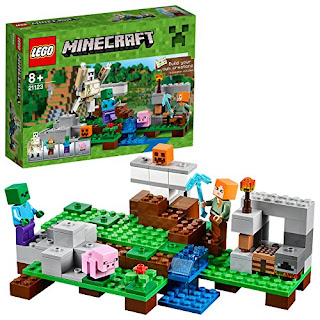
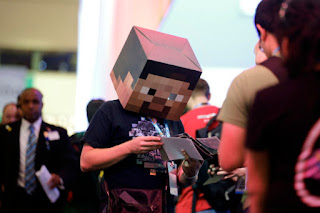
How are video games traditionally marketed & what franchising takes place? television adverts billboards posters  word of mouth - which social media has increased  newspapers  specialist magazines  pre-releases / demo versions https://www.slideshare.net/Katrinabrookes/marketing-minecraft Examples  of franchising -  Lego acts as a way into Minecraft for younger users who have been inspired by the creativity of Lego, as the game is the continuation of this. Jinx clothing allows Minecraft enthusiasts to show their identity and can also act as collectibles. Egmont Group books (publisher) creates hand books based around Minecraft, so this type of franchising is aimed at those already involved within the game rather than beginners, providing both knowledge and entertainment.    Intertextuality helps to widen the audience as it broadens the interests of those playing the game as there are various 'mods' which link...

MINECRAFT - AUDIENCE & INSTITUTION

Image
Minecraft is often used as an educational tool as it allows users to 'create not destroy' which sets it apart from other games within the industry, which are often targeted around violence. The endless modes which Minecraft provides allows users to create individual worlds and 'builds' which can then be shared with other users to expand social interaction. Traditionally children are encouraged to not interact with others on the internet as, for obvious reasons true identity can be hidden. However, this game is known online as a good platform for children to interact with others as they all share similar interests within creation.  Minecraft was brought by Microsoft in 2014 for $2.5 million which resulted in many stipulating how it would impact on the game itself... Advantages - provides sufficient funding  the game helps to widen the audience for Microsoft as traditionally it was deemed a simple and 'boring' platform for adults  Minecraft hasn't ...

THE JUNGLE BOOK 2016 - HOMEWORK TASK

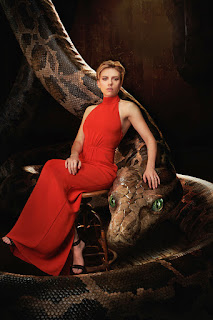
How did Disney successfully use cross-media promotion as part of The Jungle Book’s marketing campaign? The 2016 version of the Jungle Book licensed other manufactures to produce related products, such as the brand Kenzo designed clothing to mark the films release with featured designs from the original version. Similarly Disney also made links to companies such as Mcdonald's where the Jungle Book related images and toys were displayed on the 'happy meal' boxes. This use of cross-media production by licensing other manufacturers gives Disney a huge scope in, firstly manufactures they can partner with, which then opens the opportunity to reaching a larger audience. Another way in which Disney created a successful marketing campaign through the use of cross-media promotion is through social media, which is very relevant in the 2016 version of the Jungle Book. For example, Disney partnered with Snapchat, where users could use filters which made them look like the re-imagined c...

THE JUNGLE BOOK (2016)

Image
PRODUCTION   The film was produced by Walt Disney Pictures, directed and co-produced by John Favreau and written by Justin Marks. It was partly based on Disney's original version but drew more on Kipling's original books which had much darker tones and Disney wasn't as focused on aiming this version at a family audience.  The re-production continued the ongoing policy to create live-action versions of previously animated classics which gives the films momentum before they even begin.  CGI production was used to add the live-action.  Animals and landscapes were created on computers by the British digital effects house - MPC. Here they used the concept of realism rather than cartoon which hence targeted older movie-goers. This was also effective as this target age group will have previously enjoyed the original 1967 version throughout their childhood, and hence provides nostalgia.  Favreau wanted the film to be a homage to classic Disne...

THE JUNGLE BOOK (1967)

Image
PRODUCTION & TECHNOLOGY Released in 1967 by Walt Disney Productions which was produced in the Walt Disney Studio, which helped to keep the costs of production low.  They used traditional cell animation as well as the use of multi-plane to create a 3D affect. Walt Disney had personal control over all stages of production and distribution.  The storyman was Bill Peet who did the equilivant work of '40 men' E.g. storyboarding  E.g. writing the screenplay  E.g. recording voices  Cell animation concept (4 layers) animation cell e.g. mouths  hold cell e.g. character 2 hold cell e.g. character 1 background layer  The Jungle Book was the final film Walt personally worked on before his death. The original book version by Rudyard Kipling was deemed 'too dark' for family audiences to enjoy. Walt made further changes to Kipling's version, such as he feared the tiger would be deemed as a clique, as well as he felt the audi...

THE JUNGLE BOOK (1967) VS. THE JUNGLE BOOK (2016)

The first clear point which separates the two versions of The Jungle Book story is the money involved within the production. Firstly, the estimated the budgets are massively different, with the 1967 version estimated at $4,000,000 and the later 2016 version at $175,000,000. Due to this alone, the methods used in the two different productions will have major differences, as the extra money allowed for the 2016 version of The Jungle Book will have helped to aid the modern technology which was used to create the live-action film. Both takes on the film made a huge amount of profit, with the cumulative worldwide grossing amount estimated to be $64,000,000 - making that a $60,000,000 profit. Though the later 2016 version reached $966,550,600 - resulting in an even larger profit being made. Though I don't feel that this difference in the profit made related to the better film production, but the difference in time period the films were made in. For instance, the modern version of T...

TIMELINE OF THE WALT DISNEY COMPANY

Image
1923 - founded and signed a contract with M.J Winkler 1926 - 'Disney Brothers Cartoon Studio' changed to 'Walt Disney Studios' 1928 - loses the Oswald's series contract 1929 -  replaced by "Walt Disney Productions"  1930 - distribution moved to Columbia Pictures  1932 - distribution moved to United Artists  1936 - distribution moved to RKO Radio Pictures  1938 -  "Walt Disney Enterprises", "Disney Film Recording Company", and "Liled Realty and Investment Company" and "Walt Disney Productions, Ltd." are merged to form "Walt Disney Productions" 1940 - company goes public 1941 - animators strike  1949 - begins production on the first live-action feature  1953 - 'WED Enterprises' is brought in to control Disney's rights 1954 -  ends its distribution deal with RKO Radio and founds Buena Vista Film Distribution Company Inc 1961 - buys the rights to Winnie-the-Pooh 1966...

INITIAL RESEARCH: THE JUNGLE BOOK

Image
The Jungle Book (1967) Who made it? Disney created the original (1967) film based on Rudyard Kipling's book of the same name How was it marketed? limited edition DVD vaulted the purchases of the film (stopped to build up the demand) vinyl soundtrack  digital downloads  theme park rides  How successful was it? box office smash  $141 million gross (29th highest grossing film in the USA) $205 million made worldwide  E.g. advert - codes & conventions  audience? how successful? The Jungle Book (2016) Who made it? based on the original by Rudyard Kipling Jon Favreau Brigham Taylor How was it marketed? fan conventions showing sneak-peak footage bloggers entertainment news sites trailers included the scarier moments from the film to widen their audience the actors appeared in many posters/billboards alongside their animated character  attached their adverts to other films like 'Star Wars: the For...